ENVIRONMENT
What the Tide Leaves Behind: Exploring the Hidden History of Coastal Landscapes

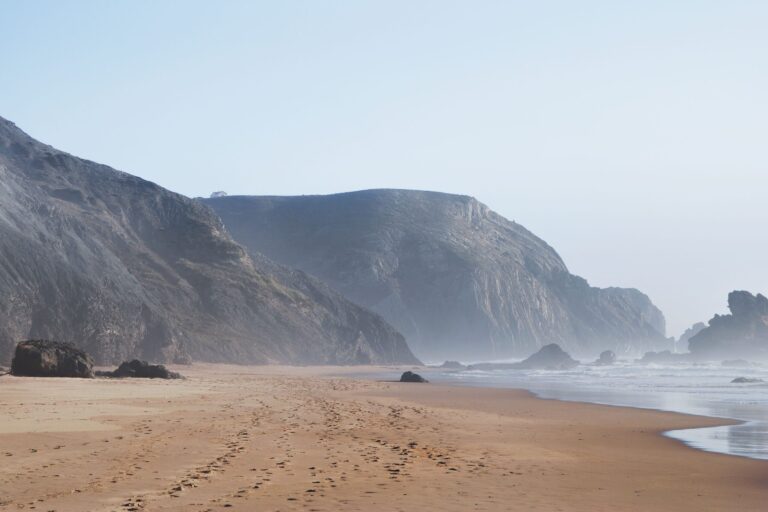
WORDS: Supplied Content PHOTOGRAPHY pexels-tiana-18128-529411
Coastal metal detecting can uncover coins, jewellery, fishing equipment, and many other kinds of objects associated with the area’s past. For hobbyists interested in history, identifying a find and researching its possible age or use can be an important part of the experience.
Places like former harbours, landing places, and seaside resorts can provide good starting points for research. But tides and shifting sand affect where objects are found, sometimes moving them away from where they were lost.
Understanding such factors can help detectorists investigate their finds.
Researching How a Coastline Was Used
Historical maps and photographs can show where things like piers and landing places were once located, before they were demolished or abandoned. Detectorists can use such records to research how a stretch of coastline was once used.
A map might identify a former boatyard, while photographs could show bathing facilities or steps leading down to the beach, for example. Comparing records from different dates can help establish when these features were built and how long they remained in use.
Look for information about what people actually did at the location. A pier used by fishing boats would have served a different purpose from one built for promenading, although some structures would have accommodated several activities over time.
Local archives, museum collections, and published histories are useful sources of further information. They may explain when a harbour expanded, why a landing place was abandoned, or how a beach became popular with visitors.
Records of these changes also help distinguish different periods of activity at the same location. A beach used for fishing before becoming a holiday destination may have received lost or discarded objects for quite different reasons over time.
Researching these changes provides background rather than a list of objects to expect. Even at a well-documented site, surviving material may have been removed, buried beyond a detector’s reach, or deposited somewhere that cannot legally be searched.
Also, waves and currents move sediment, exposing some objects and covering others. An item recovered near an old structure was not necessarily used there, so its identity needs to be investigated separately from the history of the location.
Identifying Objects Found Along the Shore
An unfamiliar object is easier to research when you have recorded its basic features. Start with its material, dimensions, shape, and any visible lettering or decoration.
Coins often provide a clear date, but that date only establishes when they were minted. It does not reveal how long they remained in circulation or when they reached the beach.
Other objects may require more research. A buckle, button, or metal fitting might resemble several items made for different purposes, particularly if corrosion has obscured its original shape.
Markings can provide more specific information than appearance alone. A manufacturer’s name, registration number, or place name gives you something concrete to investigate, although the meaning of a mark still needs to be checked.
Comparing Finds with Documented Examples
Descriptions of documented finds provide useful examples of what has survived in tidal environments. London Museum describes Thames discoveries like a medieval gold ring and eighteenth-century false teeth! So, you may be able to match similar finds to documented ones.
Identifying an object matters before attempting to explain its connection with a location. When comparing your own find with a published example, check dimensions, construction, and markings rather than the colour or general shape alone.
A close visual resemblance is a reason to investigate further, not sufficient grounds for a definite identification.
Researching and Recording Your Finds
For a hobbyist, establishing an object’s likely use and approximate age is a worthwhile result. There may be no reliable way to identify its owner or explain how it was lost.
Photograph interesting finds before cleaning them, including close-ups of markings and damaged areas. And avoid scraping or polishing unfamiliar objects, as that may remove details needed for identification.
Record the date and location of recovery, along with measurements and a brief description. Keep observations separate from interpretations: visible lettering is an observation, while a proposed connection with a local business could remain something to verify.
Compare reliable references rather than relying on a single matching photograph. Museum catalogues and specialist identification guides are useful where they explain the features supporting an identification.
Modern finds can also be worth researching. A token or badge with a name on it may lead to information about a local attraction or organisation, even when the object itself has little monetary value.
Keep any supporting references with your notes so you can revisit them later. If an identification remains uncertain, record it as provisional rather than choosing the most interesting explanation.
Potentially significant discoveries may require advice or reporting beyond routine identification. Responsible detecting is required around historic places, but requirements vary between jurisdictions.
Consult the relevant local authority rather than assuming that rules from another region apply.
Getting Started with Coastal Metal Detecting
Start by checking that detecting is permitted on your chosen beach. Then choose equipment that matches your experience and budget.
For example, Serious Detecting metal detectors range from beginner kits to professional gold machines. Some are designed with beaches in mind. Others can be used for underwater treasure hunting.
So, look for a model that is suited to the conditions you intend to search, whether that is dry land, wet sand, or shallow water.
Practise using the controls before your first outing, and check tide times and weather conditions before setting out. Also, follow local rules on recovering and reporting finds, refill holes, and remove any rubbish you uncover.
Plan Your Coastal Search
Coastal metal detecting combines the practical work of finding objects with the opportunity to research what they are. Maps, photographs, and local records provide background, while careful identification helps establish what can reasonably be said about each discovery.
Hopefully this article has been interesting and helpful. If that is the case, then take a moment to check out some of our other informative posts.
Note: The views and opinions expressed in this article are those of the author(s) and/or interviewee(s) and do not necessarily reflect the official policy or position of Ocean Road Magazine, its publisher, or its staff. While every effort has been made to ensure the accuracy of the information provided, Ocean Road Magazine makes no representations or warranties of any kind regarding its completeness or reliability. Readers should conduct their own due diligence before making any decisions based on the content of this article.