PEOPLE
Striking the balance: Deputy Mayor’s vision for the Gold Coast’s next century

WORDS: Ocean Road Editorial Staff PHOTOGRAPHY Brian Usher - www.usherusher.com 0412 910 857
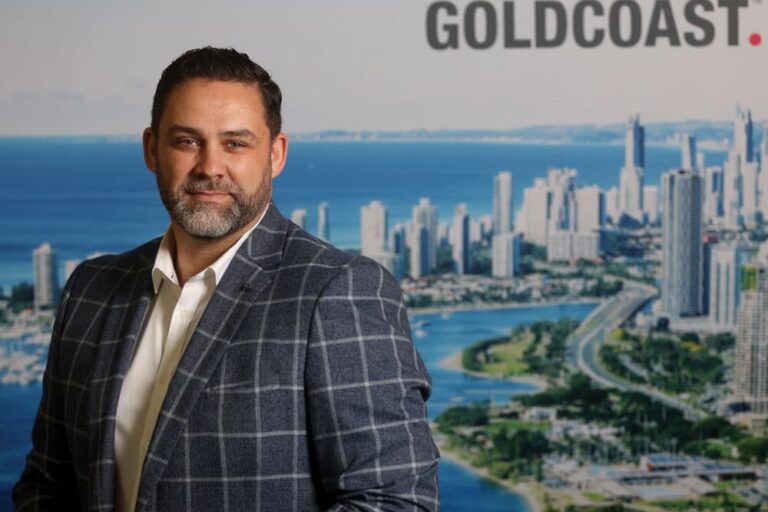
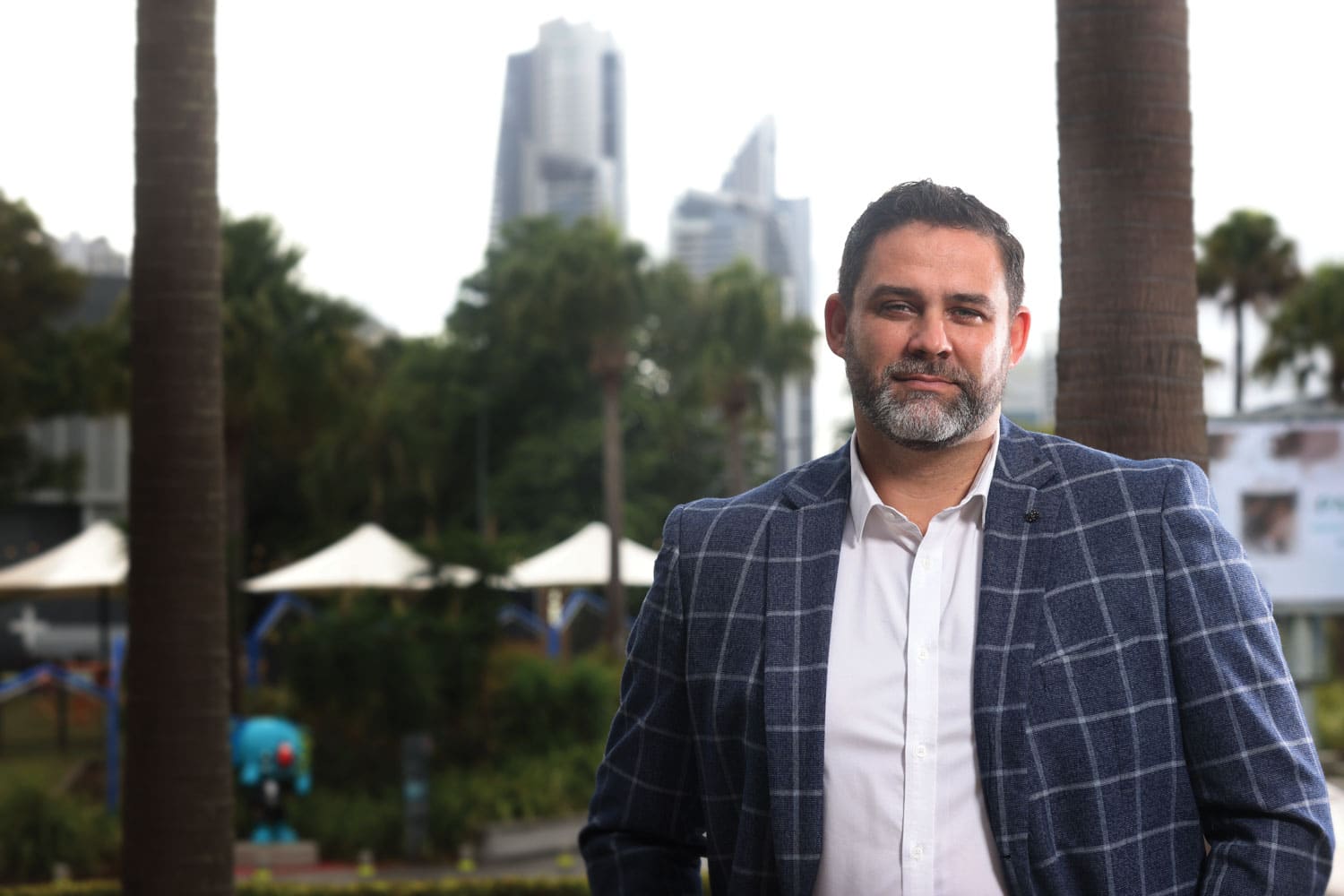
From seventh-generation roots in Alberton to shaping a city of one million, Deputy Mayor Mark Hammel maps out a long-term vision for housing, jobs, transport and opportunity on the Gold Coast
On a quiet stretch of the Logan River, in a suburb most Gold Coasters have never heard of, the past and future of the city sit side by side.
Alberton – the northernmost suburb of the Gold Coast – is where the Gold Coast’s Division 1 Councillor, Planning Chair and Deputy Mayor Mark Hammel’s story begins. It’s also where, more than 160 years ago, it began for his family.
From Prussia to the Logan River
In 1860, six families arrived in Australia together, emigrating from what was then Prussia in northern Germany. They settled first near Bethania, before moving further down the Logan River, where farming proved more viable. Names like Rossmann and Kleinschmidt are still well known in the region. Mark’s ancestor, Wilhelm Hammel, was among them – a name that still threads its way through generations.
Today, Mark’s sons, aged 4 and 2, represent the seventh generation on that same plot of land. The original 40-acre property remains in family hands. The hardwood cottage, built from timber felled and milled on the property, still stands.
“We’re the only family still on the original property,” he says. “That continuity matters.”
It’s a story that mirrors the broader Gold Coast narrative: migration, risk, reinvention – and a relentless belief in building something better.
Community, then and now
Mark grew up in the same street, attended Beenleigh State High School back when Helensvale and Coomera barely existed, and watched his father leave a banking job at Westpac to return to the farm because, quite simply, “all he wanted was the sun and the dirt.”
The farm once produced some of the region’s best strawberries and sweet potatoes. While they still produce some of the most mouthwatering berries in the country, these days it’s less a commercial enterprise and more about lifestyle — bartering watermelons for sweet potatoes, swapping produce with neighbours over coffee.
“That’s how it used to be,” Mark reflects. “No one went without. Community meant something and we looked after each other.” Community. It’s a word he returns to often.
In a rapidly expanding city approaching a million residents over the next 20 years, how do you retain that sense of local pride and collective responsibility? For Mark, the answer begins with grassroots sport, churches, community groups – and increasingly, with bold and long-term planning policies that usurp the four-year political cycle that often constrains big-picture thinking.
He’s particularly passionate about intergenerational living. In many cultures, elderly parents live with family. Yet current planning rules on the Gold Coast can make it difficult to build granny flats or purpose-designed dual-living homes.
“If you’ve lived your whole life in Palm Beach or Mudgeeraba, you should be able to age there, too,” he says. “Not be forced to move across or outside the city because that’s where the aged care beds are.”
The upcoming new planning scheme aims to address that, among other things — making it easier for families to keep generations together.
The density debate
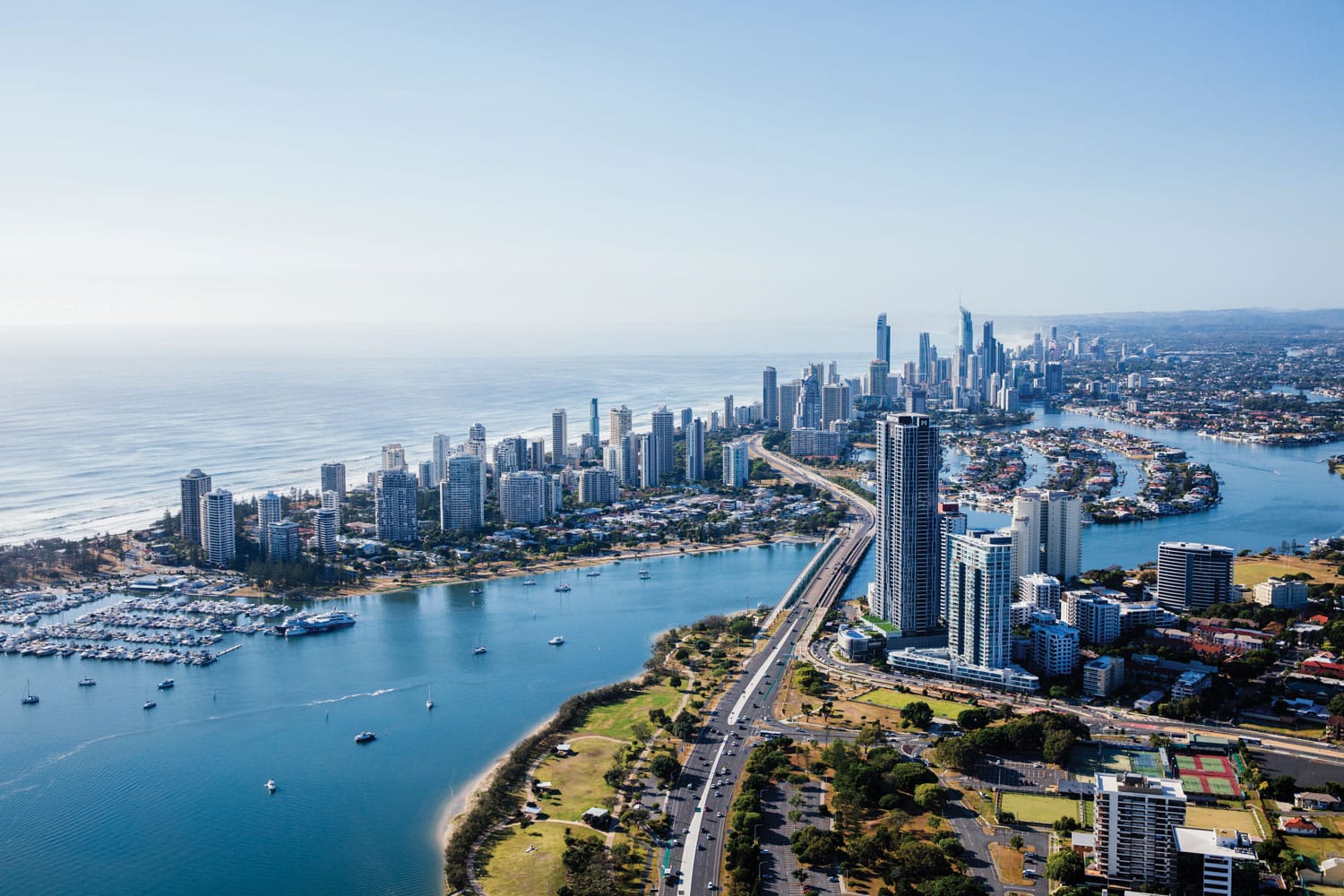
Few topics stir more emotion on the Gold Coast than development. Tower cranes dot the skyline in record numbers. For some residents, they symbolise overreach. For others, opportunity. After all, 15,000 new residents move to the Gold Coast every year and need a place to live.
As the city’s Planning Chair, Mark doesn’t shy away from the label of being ‘pro-development’.
“I’m pro-housing supply,” he clarifies. “Because if we don’t increase supply, my kids and grandkids won’t be able to afford to live here.”
By 2046, the Gold Coast will need an additional 185,000 dwellings. The figure sounds staggering – until you reframe it as classrooms filled, teachers housed, nurses commuting, and trades servicing our biggest industry – construction.
Mark has seen the human side of the housing crunch: teachers giving up spare bedrooms to keep families in school catchments; hospitality workers pushed further west or north as rents and house prices climb.
“People sitting in traffic don’t always see that side,” he says. “But we do.” Importantly, he argues, density doesn’t have to mean only beachfront towers. The inland spine as local planners refer to it – suburbs like Helensvale, Ashmore, Coomera and Labrador – holds enormous potential for duplexes, triplexes, smaller lots and well-designed three-storey homes near existing schools and shops.
The goal? More choice. More affordability. More renewal. But importantly, a diversity of housing in locations that make sense: close to transport, infrastructure, hospitals, shops, schools, parks, playgrounds and community centres.
Beyond tourism: a diversified economy
For decades, tourism defined the Gold Coast. Today – almost unbelievably – it’s no longer even in the city’s top five economic pillars.
Construction remains the largest sector. But health and wellbeing, knowledge and education, technology, advanced manufacturing, marine, major events, sport and film and screen are rapidly rising. The shift to diversifying the Gold Coast’s economy began around 2012 – and more recently with the creation of city-controlled entity, Invest Gold Coast. It has been a deliberate effort to break the city’s ‘boom or bust’ cycle. “While tourism is and will always be a critical industry for us, we’re not just a holiday destination anymore,” Mark says.
That perception shift is critical ahead of the 2032 Brisbane Olympics. Unlike London or Paris, this will be the first Games anchored in a non-major global city – Brisbane and Southeast Queensland, rather than a single mega-metropolis. For Mark, the opportunity extends far beyond stadiums. “It’s tens of billions in downstream investment. Jobs. Business. Innovation. We should be aiming to capture more of that than Brisbane.”
Southport: the sleeping giant
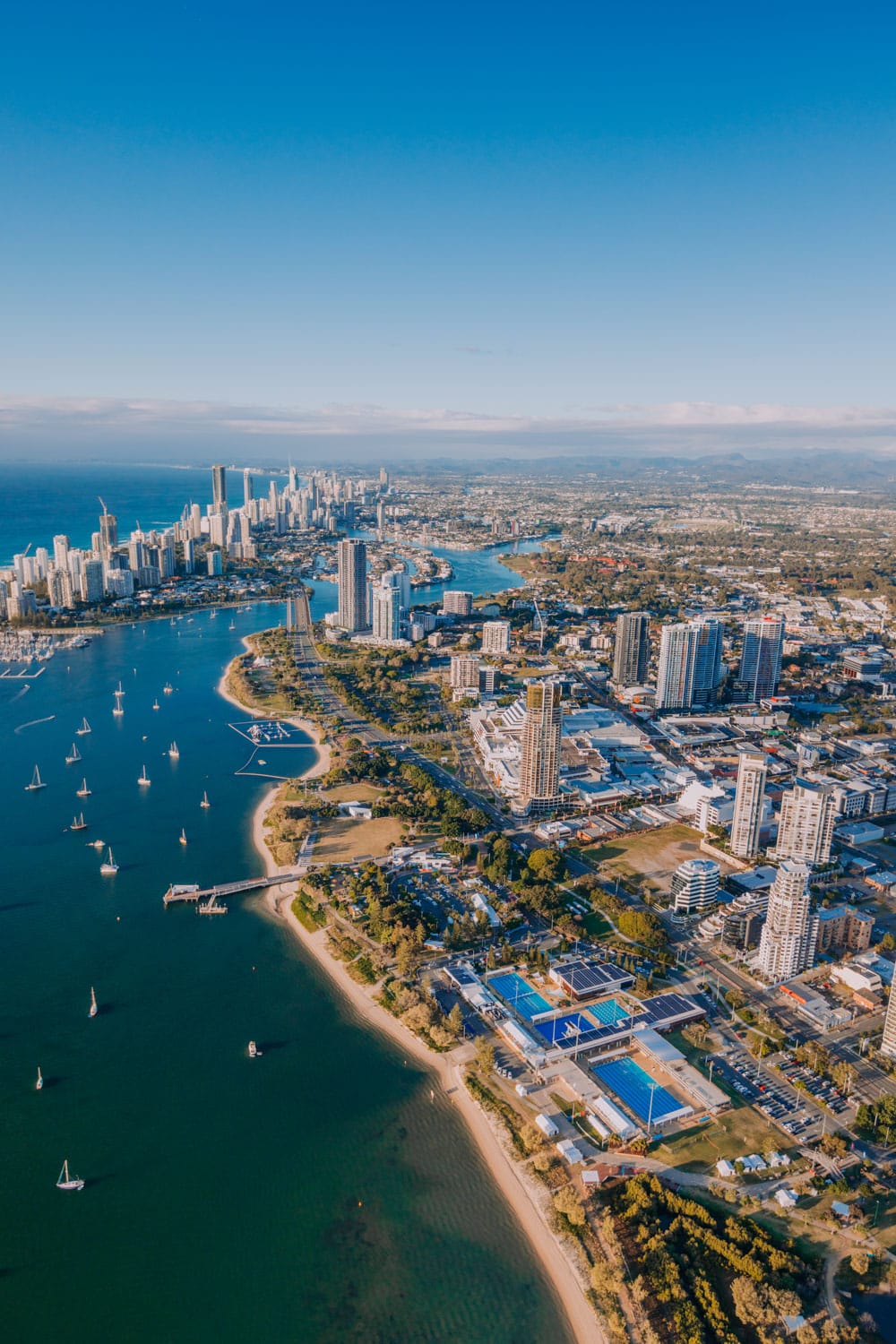
Central to that ambition is Southport. Once considered the civic heart of the city, it lost momentum as commercial tenants drifted toward Robina, Bundall and even Ormeau in the city’s far northern reaches. Mark believes Southport is poised for revival – not as a traditional CBD, but as a genuine city centre. Not to the detriment of other business districts of our poly-centric city. “Surfers Paradise, Broadbeach, Nobbys Beach, Burleigh, Robina and Coolangatta. All of these town centres have unique characters and strengths that we should protect and lean into,” he says.
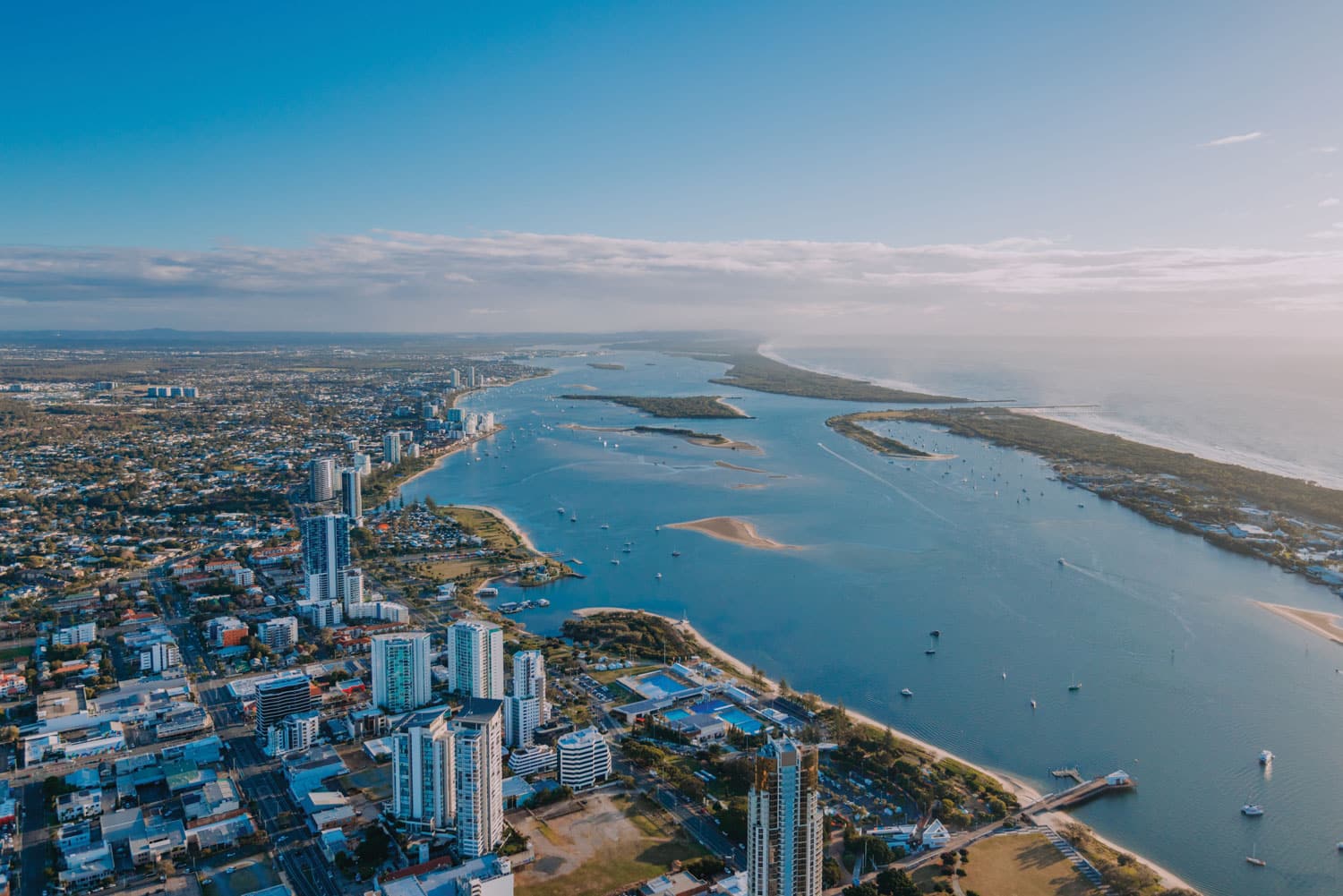
In Southport, though, he envisions up to a million square metres of high-quality office space with public squares, anchored by health and knowledge precincts, Griffith University, a new wave park and Gold Coast Arena, the Broadwater Parklands and renewed activation of The Spit. “Imagine telling a global company they can base their staff here,” he says. “Lunchtimes walking the Broadwater. After-work dinner, drinks and events at the arena. All at a lower cost for them to invest than Brisbane.”
It’s long-term thinking – 20, 30, even 40 years ahead – something Mark believes politics has lost in its focus on four-year election cycles. “I didn’t come into this job to make easy decisions, or to get re-elected,” he says. “If I lose an election backing something that I hand-on-heart believe is right for the city in 20 years or more, I can live with that” Mark says.
Transport: locking in the future
Infrastructure remains the perennial sticking point on the Gold Coast. Roads are congested. The M1 has been widened, then widened again, only to require widening again. Public transport projects spark fierce debate. Mark’s position is blunt: stop the piecemeal approach. Rather than treating heavy rail, light rail and bus networks as separate battles, he advocates legislating a whole-of-city public transport plan – corridors protected by government and locked in for the next 30 to 40 years, immune to changes in political winds.
“Every stage of a transport project – light rail is the obvious example – has historically opened up a new opportunity to politically delay or kill it,” he says. “We need to lock in the entire network and deliver it. “Light rail is critical along our coastal corridor, but we need to shift the conversation to the whole transport network we will need for a future of a million people and counting. East-west rapid bus, heavy rail, paths and roadways for walking and riding, and the innovative modes of transport coming at us in the future – all working together,” Mark says.
For Mark, the aim isn’t to demonise cars – tradies will always need them, he says. But we need to make public transport so reliable and frequent that leaving the car at home becomes the obvious choice. And also provide the tentacles of mobility for the Gold Coast’s increasingly diversified workforce to get to and from home.
A city that says ‘yes’
Perhaps the most striking theme in Mark’s vision is mindset. From his Prussian ancestors seeking opportunity, to the post-COVID surge that reshaped migration patterns, he sees the Gold Coast as a place defined by optimism and action. “We’re a city that says ‘yes’,” he says. “Yes to film studios. Yes to arenas and tech hubs. Yes to backing big ideas and dragging state and federal governments to the table if we have to.”
That attitude, he believes, is the city’s greatest competitive advantage – arguably even more than its beaches and hinterland.
The upcoming new planning scheme, due before the end of 2027, is designed to reflect that spirit. Simpler. More flexible and amendable. Built to evolve rather than sit static for a decade. More families with roofs over their heads, a healthier economy and more jobs, better transport choice, and well-planned growth and infrastructure – all while protecting the lifestyle and environment that locals love.
It sounds complicated. But for Mark, the equation, especially during a housing crisis, needs to be simple. Without increased housing supply and diversified jobs, the Gold Coast risks pricing out the very people who built it. And on a farm in rural Alberton, Queensland, Australia, where seventh-generation children play beneath the gum trees and the same Queensland sky their ancestors first saw when they settled in 1860, that’s not a future he’s willing to accept.
That’s why he approaches major city-shaping projects with confidence and care – recognising both the opportunity and the responsibility they carry. This includes the expansion of the Yatala Enterprise Area, strengthening local jobs and investment, and the Advanced Resource Recovery Centre – or ARRC – which is helping transition the Gold Coast and Southeast Queensland region away from landfill and toward more sustainable, circular waste practices.
It also includes the planning for the development of the Norwell cane fields in the city’s north – one of the largest remaining greenfield sites in the country – with the potential, over several decades, to deliver new housing, supporting infrastructure, industrial land, waterways and open green space on a scale the city hasn’t seen for decades.
Not just lip service or spin from a politician, but real action to back it all up. “Like many families, I have young children who also need a pathway to a lifestyle on the Gold Coast that will also mean being able to afford to buy your own home,” Mark says. “Right now, the supply and demand equation prevent this from being possible, and we need to fix this through working with all levels of government to deliver more supply. We want the Gold Coast to be the easiest place in Australia to get an approval that leads more houses and jobs for more families. “We haven’t even scratched the surface yet,” he says. “If we get this right, the best chapters of the Gold Coast story are still to come.”