BEER
Bottled in Time: Australia’s Oldest Breweries

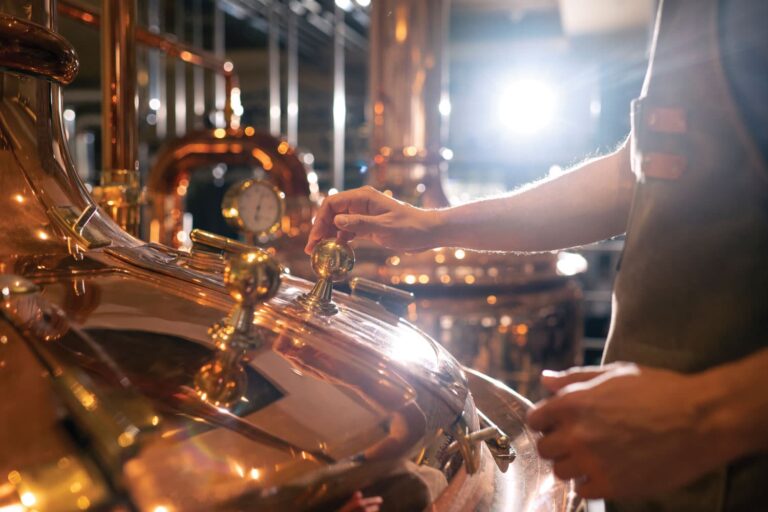
WORDS: Krista Hall, Certified Cicerone PHOTOGRAPHY @freepik.com
From convict origins to craft revival — the breweries that shaped what Australians drink
Long before the craft beer tap handles and single-origin hops, before the IPA lists that now fill menus from Noosa to Margaret River, someone in a Tasmanian valley was trying to work out how to brew decent beer without reliable refrigeration, consistent ingredients, or much of a clue. They figured it out. And in a couple of cases, they never really stopped.
Beer arrived in Australia before permanent settlement did. Captain James Cook carried brewing supplies on the Endeavour — not for pleasure, but practicality. Fermentation killed the bacteria that made the ship’s water dangerous. By the time the First Fleet landed in 1788, beer wasn’t just a drink; it was infrastructure.
A government brewery opened in Parramatta in 1804 — Australia’s first commercial operation — but it lasted just two years before being sold off. The early colonial beer scene was messy: unfiltered, unrefrigerated, and often made with wild local yeasts that didn’t play nicely with the heat. The brews were sour, inconsistent, and nothing like the ales settlers had left behind in England and Ireland. But a few determined characters pushed through.
Cascade Brewery, Hobart — Est. 1824
Australia’s oldest continuously operating brewery sits at the foot of Mount Wellington in South Hobart, fed by mountain water pure enough that the colonial administration once fought bitterly with its founder over access rights. That founder — Peter Degraves, an entrepreneur who spent five of his first seven years in the colony in prison for debt — clearly had his priorities straight.
The brewery opened in 1832 (the broader Cascade estate dates to 1824) and never really looked back. After a devastating bushfire nearly destroyed the building in 1967, it was rebuilt and back in production within three months. Today, owned by Asahi, it holds the distinction of being not just Australia’s oldest brewery but the oldest continuously operating manufacturing facility in the country. Cascade is unique among Australian breweries in that it still operates its own maltings, producing malt from locally grown Tasmanian barley. The iconic thylacine label — taken from a 19th-century naturalist illustration — remains one of the most recognisable images in Australian beer.
Coopers Brewery, Adelaide — Est. 1862
The Coopers story begins not with a brewer, but with a shoemaker. Thomas Cooper, a Yorkshire immigrant who arrived in South Australia in 1852, started brewing in 1862 using his wife Ann’s family recipe to help her recover from a fever. He had no formal training, owned no hotels, and refused — on religious grounds — to sell to pubs. He nearly went broke twice.
Over 160 years later, Coopers remains the only major Australian-owned brewery still controlled by descendants of its founder. It is now in its fifth generation of Cooper family ownership — a fact that makes it something of a national anomaly in an industry dominated by Japanese multinationals Asahi and Kirin. Their naturally conditioned ales, with their signature cloudy pour and bottle sediment, are still made to essentially the same recipe Thomas developed in his Norwood backyard.
The global beer story runs even deeper. The Cascade and Coopers chapters are remarkable — but they exist within a tradition that goes back roughly 7,000 years. The world’s oldest known brewery was discovered in a cave in Israel, dating to around 13,000 BCE. The ancient Sumerians brewed beer from fermented bread. Egypt’s labourers building the pyramids were paid partly in beer. When European settlers arrived in Australia and started fermenting whatever they could find, they were participating in one of humanity’s most ancient and persistent rituals.
The modern craft beer revival — now with some 400-plus microbreweries operating across Australia — is sometimes framed as something new. But the instinct behind it, people brewing with care, with local ingredients, for their community, is as old as agriculture itself. Next time you crack open a Coopers Pale Ale or find yourself in Hobart with an afternoon to spare, that long lineage is worth raising a glass to.